Somnera
CBT-I Science

CBT-I vs. sleep hygiene: why the advice you already tried didn't work

Cool room, no screens, no caffeine after two. You have done all of it. There is a reason it didn't fix anything, and sleep medicine's own guideline says so.

5 min read

Last reviewed August 26, 2026

Share

Sleep hygiene is not a treatment for chronic insomnia, and the guideline says so explicitly. The American Academy of Sleep Medicine's 2021 guideline on behavioural treatments recommends against using sleep hygiene as a single-component therapy. Not because the advice is wrong, but because it is aimed at a different problem than the one you have.

Which means the months you spent getting the room cooler and the screens off were not a personal failure. You were following instructions that were never going to be enough on their own.

What sleep hygiene is for

The standard list is familiar: keep the bedroom cool and dark, avoid caffeine late, avoid alcohol near bedtime, exercise but not too close to sleep, no screens in the hour before bed, keep a regular schedule.

Every one of those is reasonable. As a set, they describe conditions under which a person who sleeps normally will keep sleeping normally. That is prevention — genuinely valuable, and worth doing.

Chronic insomnia is a different animal. By the time someone has been sleeping badly for months, the problem is no longer about conditions. It is self-sustaining, and it is being held in place by two things that a cool dark room does not touch.

What is actually keeping it going

Too much time in bed

The natural response to bad sleep is to protect it. Go to bed earlier in case tonight is the night. Stay in bed later to catch up. Lie down in the afternoon when the chance appears.

Each of those is sensible, and together they spread a small amount of sleep across a large amount of time in bed. Sleep pressure — the drive that builds the longer you are awake — gets discharged by all that extra lying down, so by bedtime there is less push toward sleep than there should be. Nine hours in bed for six hours of sleep means three hours of lying awake, every night, teaching your body something.

Take the free assessment to see:

  • Your Insomnia Severity Index (ISI) score
  • A personalized 6-to-8-week CBT-I plan, built by a sleep physician
  • How your sleep improves, night by night
Start free assessment

The bed stops meaning sleep

That is the second thing. After enough nights of lying in the dark feeling frustrated, the bed stops signalling sleep and starts signalling this is where I lie awake. Nobody decides to learn that. It forms anyway, the same way any repeated association does.

It is why people with insomnia sometimes fall asleep instantly in a chair in front of the television and then find themselves wide awake the moment they get into bed. The chair carries no history. The bed carries months of it.

What CBT-I does instead

CBT-I attacks both directly.

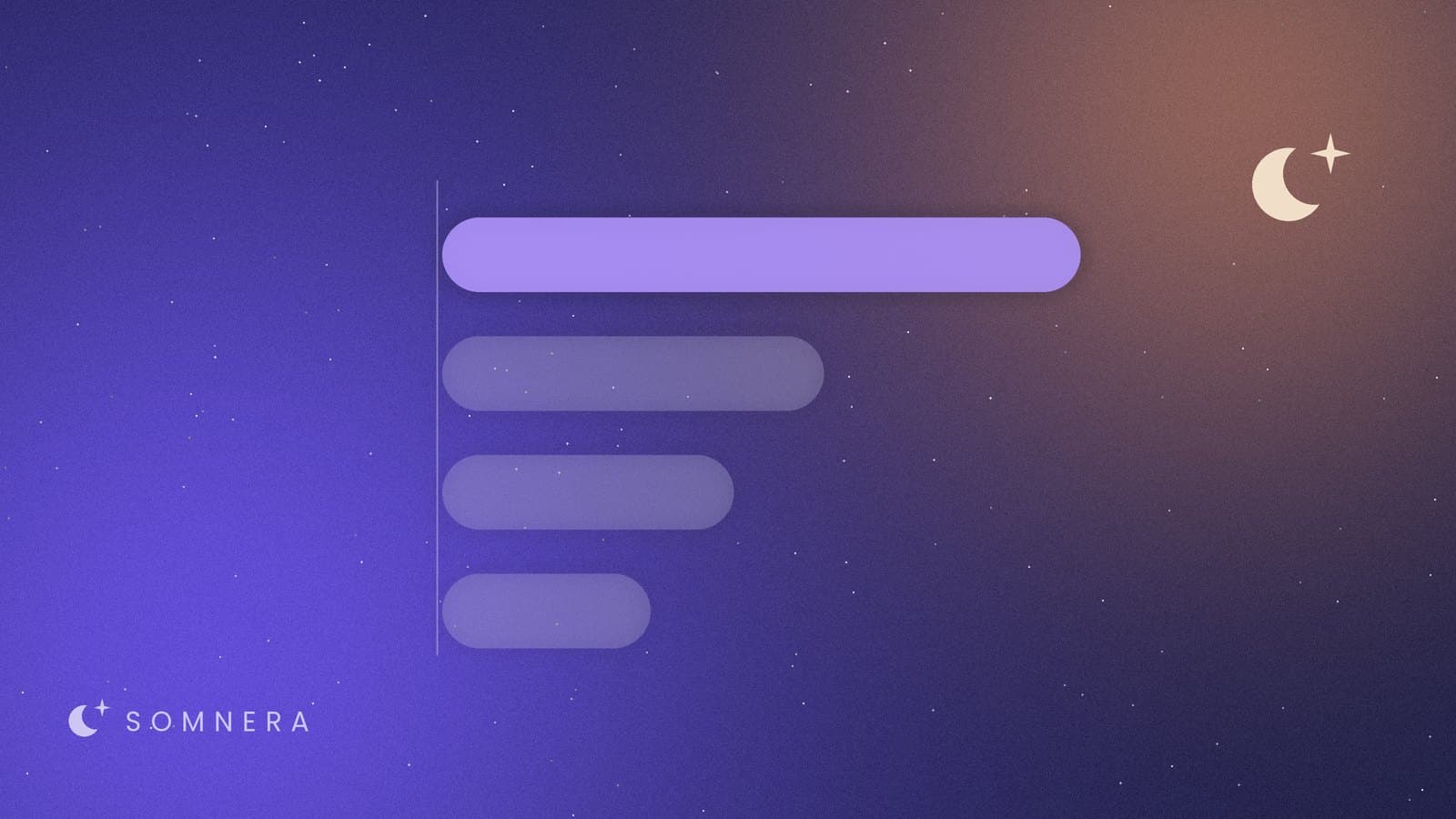
Sleep restriction narrows the time you spend in bed to roughly the amount you are actually sleeping, then widens it as sleep becomes more solid. Less time in bed means more sleep pressure by bedtime, and a window matched to real sleep means most of the time in bed is spent asleep — which is what unpicks the association. It is the piece doing most of the work in the research, and the piece that makes people feel worse for the first fortnight before it starts helping.

Stimulus control asks you to leave the bed when you have been awake a while, and to keep the bed for sleep. Dull, unglamorous, and the mechanism by which the bed goes back to meaning what it used to.

Cognitive work addresses the arithmetic that runs at 3am — how many hours are left, how bad tomorrow will be — because that arithmetic is arousal, and arousal is the thing keeping you awake.
A fixed rising time holds the whole thing steady, including at weekends.

Side by side

Sleep hygiene

CBT-I

What it changes

The conditions around sleep

Time in bed, and the arousal that blocks sleep

Guideline position

Recommended against as a standalone therapy

Recommended first-line, ahead of medication

Effort required

Low

High, especially in weeks one and two

Feels like

Sensible and mild

Counter-intuitive and initially harder

Best used for

Prevention, and support alongside treatment

Insomnia that has already taken hold

How sleep hygiene can backfire

There is a way the advice actively hurts, and it is worth naming.

Followed carefully, the rules turn bedtime into a performance. The room is right, the phone is away, the caffeine stopped at noon — so if sleep still does not come, something must be wrong with you. Now you are lying in the dark having done everything correctly and failed anyway.

That is a straight route to more arousal, and arousal is precisely what stands between you and sleep. Trying harder is not a neutral act here. Sleep is not a task you can complete through effort; it arrives when the conditions permit, and effort is a condition that does not.

This is also why "just relax" is such useless advice, and why simply and just have no place in any of it.

So what do you keep?

Keep the things that cost nothing and support the rest: a consistent wake time, a dark and reasonably cool room, no heavy alcohol close to bed.

Drop the expectation that they are the treatment. And drop the self-blame that comes with having done them all correctly and still lying awake — that was never a fair test.

When it is not insomnia

Some sleep problems need assessing rather than managing. Talk to a clinician if you snore loudly, wake gasping or choking, or have been told you stop breathing; if your legs feel restless in the evening and moving them helps; if you fall asleep during the day in situations where you would not expect to; if it started suddenly or alongside a new medication; or if daytime tiredness is affecting your driving.

Somnera is a self-guided education programme built on CBT-I. It is not a diagnosis and does not replace care from your own clinician.

Citations

  • Edinger JD, et al. Behavioral and psychological treatments for chronic insomnia disorder in adults: an American Academy of Sleep Medicine clinical practice guideline. J Clin Sleep Med. 2021;17(2):255–262. doi:10.5664/jcsm.8986

  • Qaseem A, et al. Management of chronic insomnia disorder in adults: a clinical practice guideline from the American College of Physicians. Ann Intern Med. 2016;165(2):125–133. doi:10.7326/M15-2175

  • Trauer JM, et al. Cognitive behavioral therapy for chronic insomnia: a systematic review and meta-analysis. Ann Intern Med. 2015;163(3):191–204. doi:10.7326/M14-2841

  • Irish LA, et al. The role of sleep hygiene in promoting public health: a review of empirical evidence. Sleep Med Rev. 2015;22:23–36. doi:10.1016/j.smrv.2014.10.001

  • Spielman AJ, Saskin P, Thorpy MJ. Treatment of chronic insomnia by restriction of time in bed. Sleep. 1987;10(1):45–56.

Frequently asked questions

No — it is useful as prevention and as support alongside treatment. It is not effective on its own for chronic insomnia, which is why the AASM guideline recommends against using it as a single-component therapy.

Sleep hygiene changes the conditions around sleep. CBT-I changes the two things actually maintaining insomnia: how much time you spend in bed awake, and the arousal that builds when you try to sleep.

Following the rules carefully can turn bedtime into a performance with a pass or fail attached. Effort is arousal, and arousal is the opposite of what allows sleep.

Keep the parts that cost you nothing, like a consistent wake time and a dark room. What to drop is the expectation that doing them properly will fix chronic insomnia, and the self-blame when it doesn't.

Trials typically run four to eight weeks. Most people notice sleep becoming more solid somewhere in weeks two to four, after an initial stretch of feeling more tired.