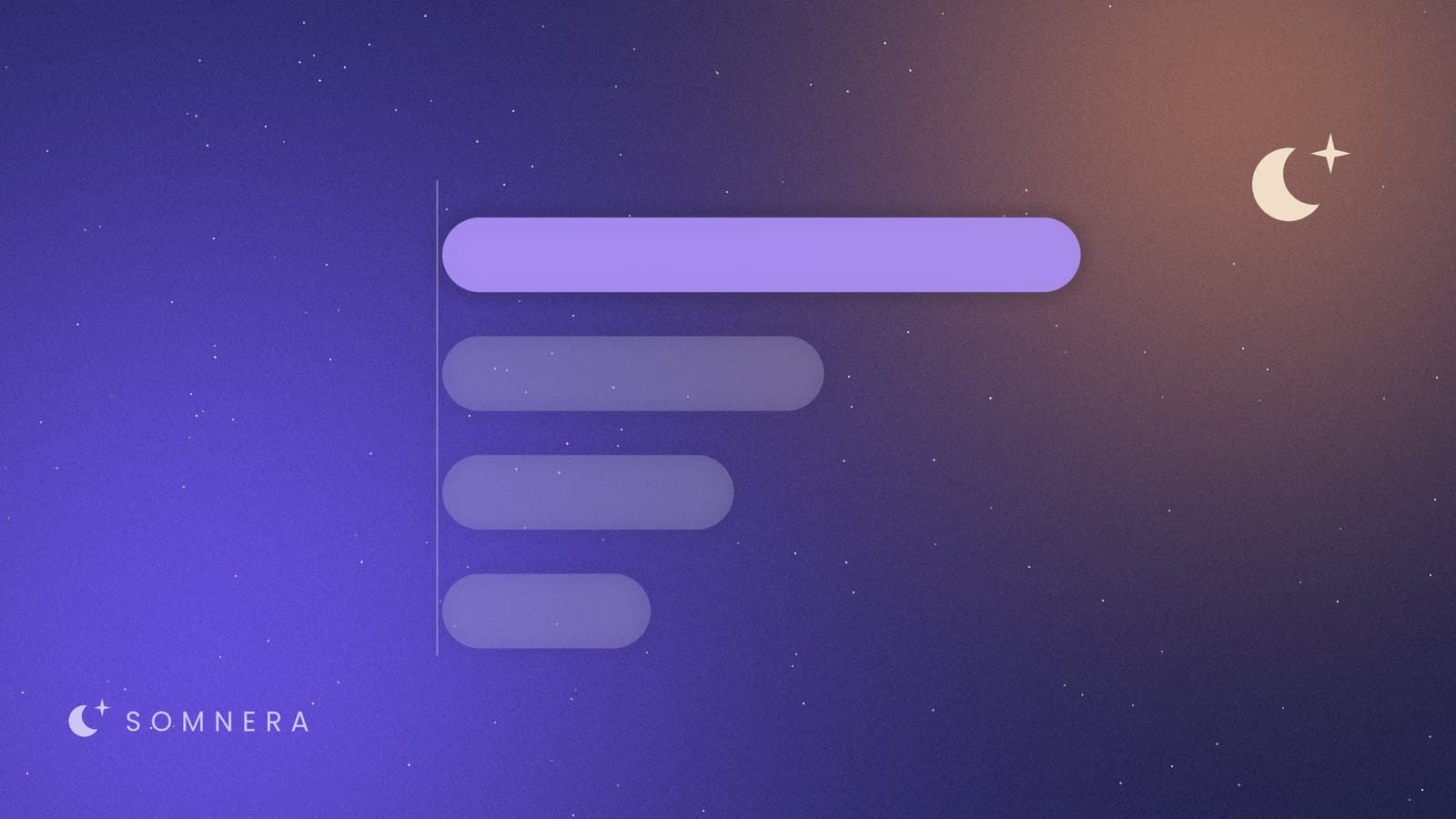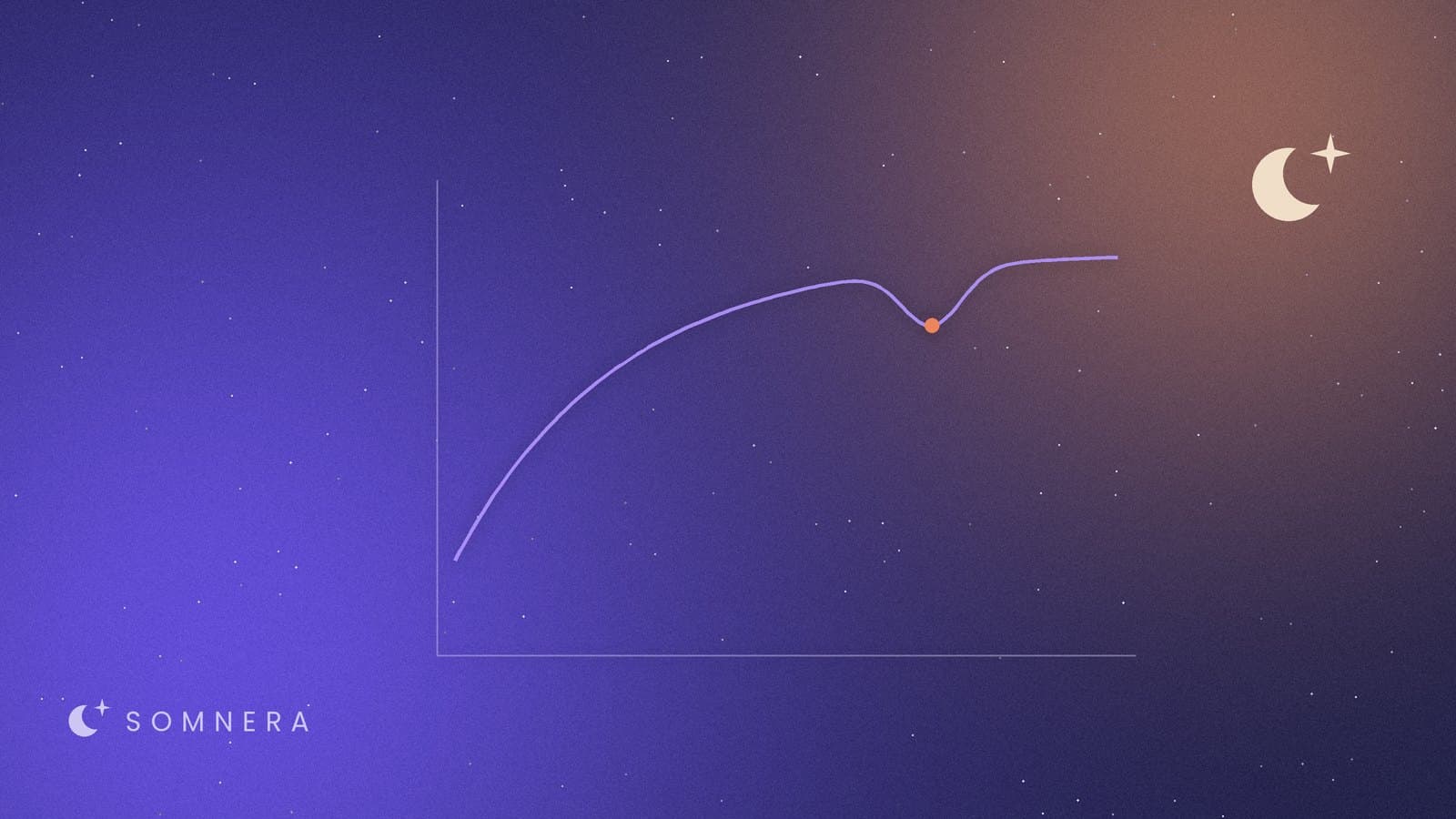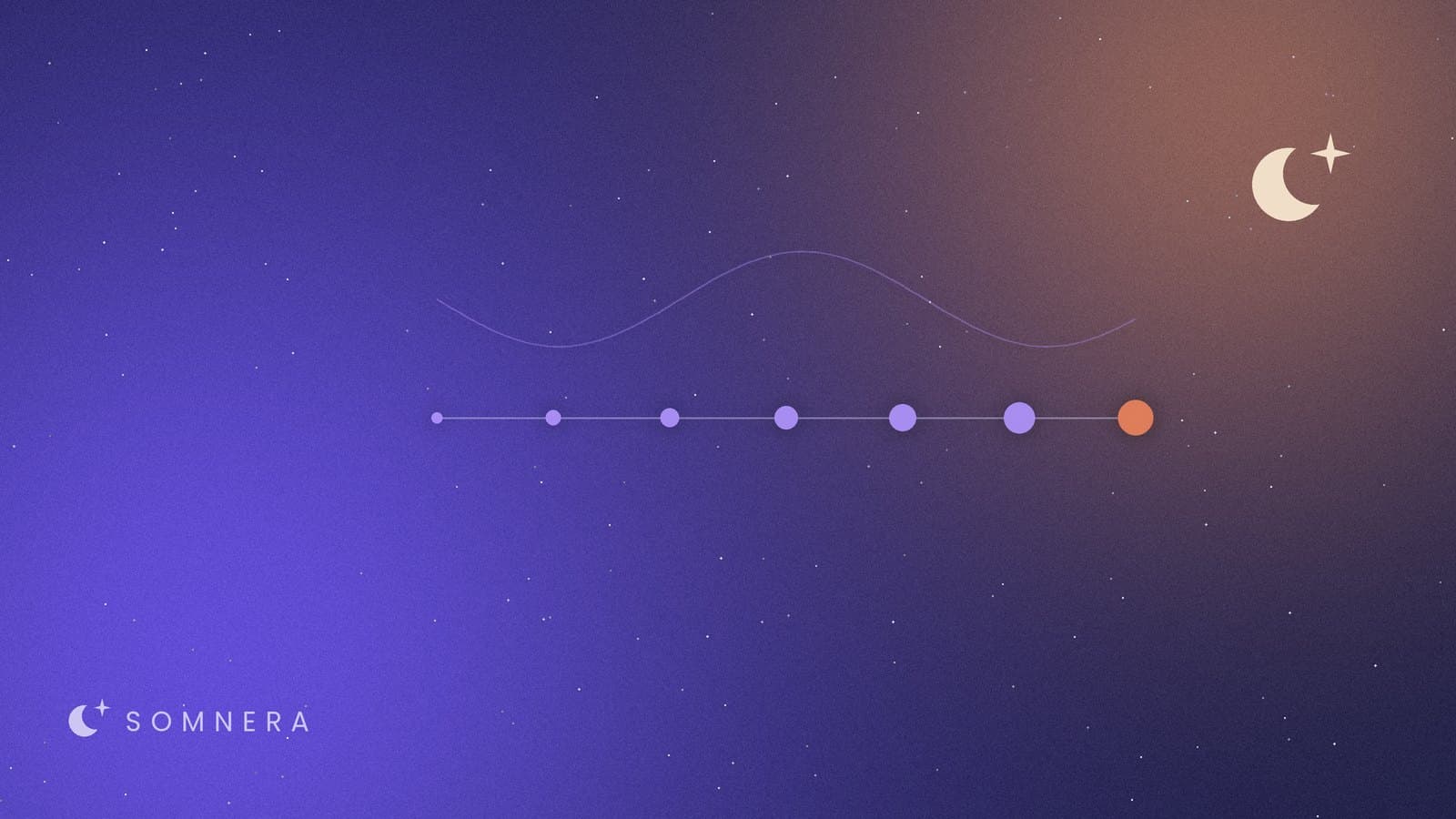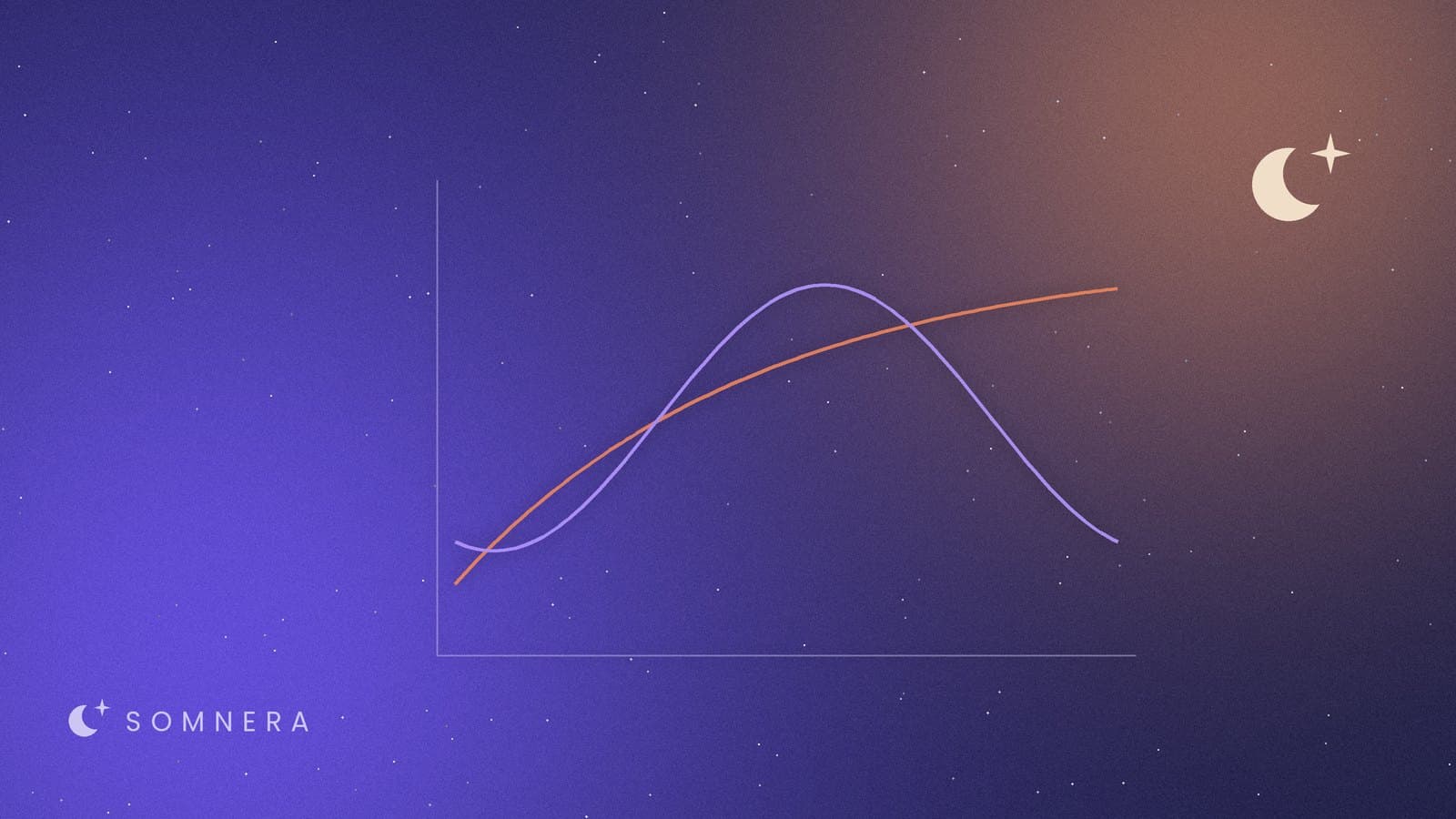
CBT-I works by changing three things that keep insomnia going: how much sleep pressure you build up, what your brain has learned to associate with your bed, and the effort and worry you bring to sleeping. None of them involves sedation. All of them are things that drift out of balance during months of poor sleep, and all of them can be moved back.
Understanding the mechanism is not required for it to work. But it makes the parts of the program that sound wrong - spending less time in bed, getting up when you cannot sleep - make sense.
1. Sleep drive
Sleep is regulated by two systems working together. One is your body clock, which sets the timing. The other is sleep pressure: a drive to sleep that builds the longer you are awake and is discharged by sleeping. This two-process description is one of the foundational models in sleep science.
Insomnia quietly undermines the second one. Someone sleeping badly tends to go to bed earlier, stay in bed later, and nap when they can - all reasonable attempts to catch up. Each of them spreads sleep pressure thinly across more time in bed, so that by the time you lie down, there is not enough built up to carry you through the night. The result is light, broken sleep spread across many hours.
Sleep restriction reverses this. By temporarily limiting time in bed to roughly the time you actually sleep, it lets pressure build to a level that produces deeper, more continuous sleep. Once sleep consolidates, the window is widened step by step. It is the most powerful single part of CBT-I, and the reason napping is discouraged while it runs.
2. What your brain has learned about your bed
The brain is very good at learning associations. Months of lying in bed awake, frustrated, checking the clock, teach it that the bed is a place for being awake. That is why so many people with insomnia fall asleep easily on the sofa and then come wide awake the moment they get into bed. Same body, same tiredness, different room - and the room has become a cue for wakefulness.
Stimulus control rewrites that association. Go to bed only when sleepy. If you are awake and frustrated, get up and go somewhere else until sleepy again. Use the bed for sleep. Keep the same rising time every morning. Repeated over weeks, the bed becomes a cue for sleep again. The practical version, including what to do at 3am.
3. Effort, attention and worry
Falling asleep is automatic. You cannot will it to happen, and the harder you try, the less likely it becomes. One influential review describes a pathway in which attention to sleep, intention to sleep, and effort to sleep each interfere with a process that is supposed to run without supervision.