Somnera
Sleep restriction

Should you nap if you have insomnia?

A nap feels like catching up. For people with insomnia, it usually spends the sleep pressure the night needs. When to avoid it, and the one situation where you shouldn't.

3 min read

Last reviewed October 7, 2026

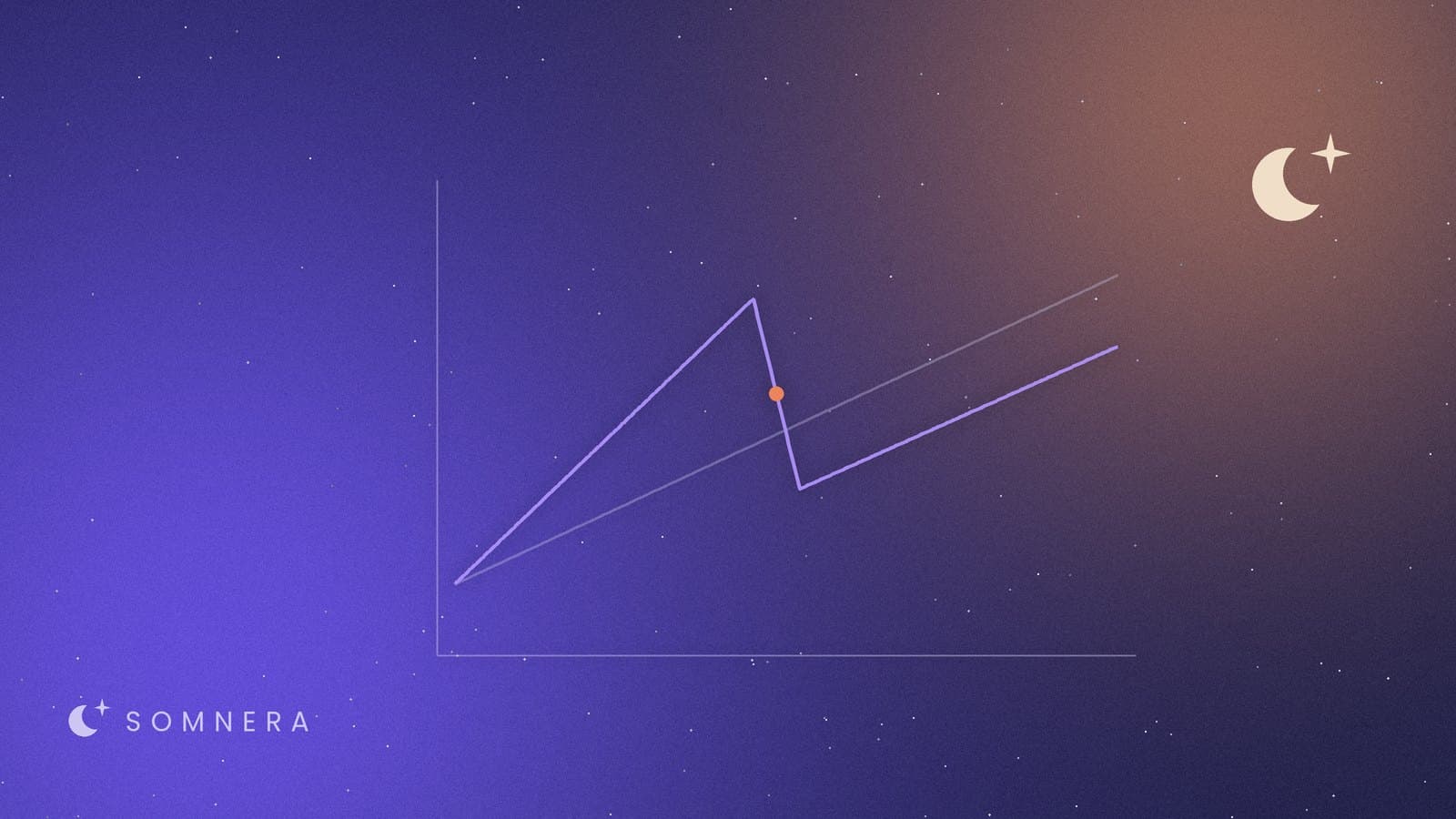
A sleep pressure line that builds through the day, drops sharply at a nap, and ends lower by bedtime

Share

If you have insomnia, a daytime nap usually makes the following night harder. It feels like catching up. In practice it spends the sleep pressure that was supposed to carry you to sleep and keep you there. That is why CBT-I asks people to avoid napping - with one important exception for safety.

Why naps work against you

Sleep is regulated by two systems. One is your body clock, which sets the timing. The other is sleep pressure: a drive to sleep that builds steadily the longer you are awake, and is discharged by sleeping. This two-process model is one of the foundations of sleep science. How CBT-I uses it.

A nap discharges some of that pressure in the afternoon. By bedtime there is less of it left - which for someone who sleeps well might not matter, but for someone with insomnia often means taking longer to fall asleep and waking more in the night. Then the next day is worse, a nap feels even more necessary, and the cycle continues.

Dozing in front of the television in the evening counts too. Ten minutes on the sofa at 9pm can be enough to make 11pm much harder.

Why it matters during sleep restriction

Sleep restriction works by narrowing time in bed so that sleep pressure builds to a level that produces deeper, more continuous sleep. A nap lets that pressure out during the day. It is one of the most common reasons sleep restriction seems not to be working. What else to check.

So while you are doing sleep restriction, protocols ask you to avoid napping - including the unplanned kind.

The exception: safety

Sleep restriction increases daytime sleepiness before it improves sleep. That has been measured directly, including objectively impaired vigilance during the restriction phase.

If you are too sleepy to drive or to work safely, do not push through. Do not drive drowsy. The right adjustment is usually to widen your sleep window, not to start napping - and if sleepiness is affecting your safety, that is a reason to do this with a clinician. Anyone who drives for a living, operates machinery, or has a condition where sleep loss carries particular risk should plan sleep restriction with a clinician from the start.
Take the free assessment to see:

  • ✓Your Insomnia Severity Index (ISI) score
  • ✓A personalized 6-week CBT-I plan, built by a sleep physician
  • ✓How your sleep improves, night by night
Start free assessment

Staying awake when you are tired

The hardest time is usually the mid-afternoon dip and the hour or two before bed. What tends to help:

  • get up and move rather than sitting somewhere comfortable;
  • get outside, or into bright light, if you can;
  • avoid the sofa in the evening if that is where you doze;
  • plan something mildly engaging for the hour you usually fade.

Expect it to be hard for a week or two. As sleep consolidates at night, the daytime sleepiness eases.

What about older adults?

Daytime napping is common in retirement, and it is easy to drift into a long afternoon nap without noticing what it is doing to the night. If you nap regularly and sleep badly, the nap is worth a close look. CBT-I for older adults.

For the rest of the method, see how to calculate your sleep window and the rest of this section.

Somnera is a self-guided education program built on CBT-I, founded and written by Dr. Camilo Ruiz, DO, FACOI, FAASM. It is not a diagnosis and does not replace care from your own clinician. The assessment is free and takes about two minutes.

Citations

  • Borbély AA. A two process model of sleep regulation. Hum Neurobiol. 1982;1(3):195–204.
  • Spielman AJ, Saskin P, Thorpy MJ. Treatment of chronic insomnia by restriction of time in bed. Sleep. 1987;10(1):45–56.
  • Kyle SD, et al. Sleep restriction therapy for insomnia is associated with reduced objective total sleep time, increased daytime somnolence, and objectively impaired vigilance. Sleep. 2014;37(2):229–237. doi:10.5665/sleep.3386
  • Edinger JD, et al. Behavioral and psychological treatments for chronic insomnia disorder in adults: an American Academy of Sleep Medicine clinical practice guideline. J Clin Sleep Med. 2021;17(2):255–262. doi:10.5664/jcsm.8986

Frequently asked questions

Usually, yes. Sleep pressure builds the longer you are awake and is discharged by sleeping. A nap releases some of it, which leaves less to carry you to sleep and through the night.

Sleep restriction works by deliberately building sleep pressure into a shorter window at night. Napping releases that pressure during the day, which undermines the method.

Then safety comes first. Sleep restriction increases daytime sleepiness. If you are too sleepy to drive or work safely, do not push through - the right adjustment is usually to widen the sleep window, not to nap, and a clinician can help.

Napping guidance for people who sleep well is a different question. The advice here is specifically for people with insomnia, and especially for anyone doing sleep restriction.