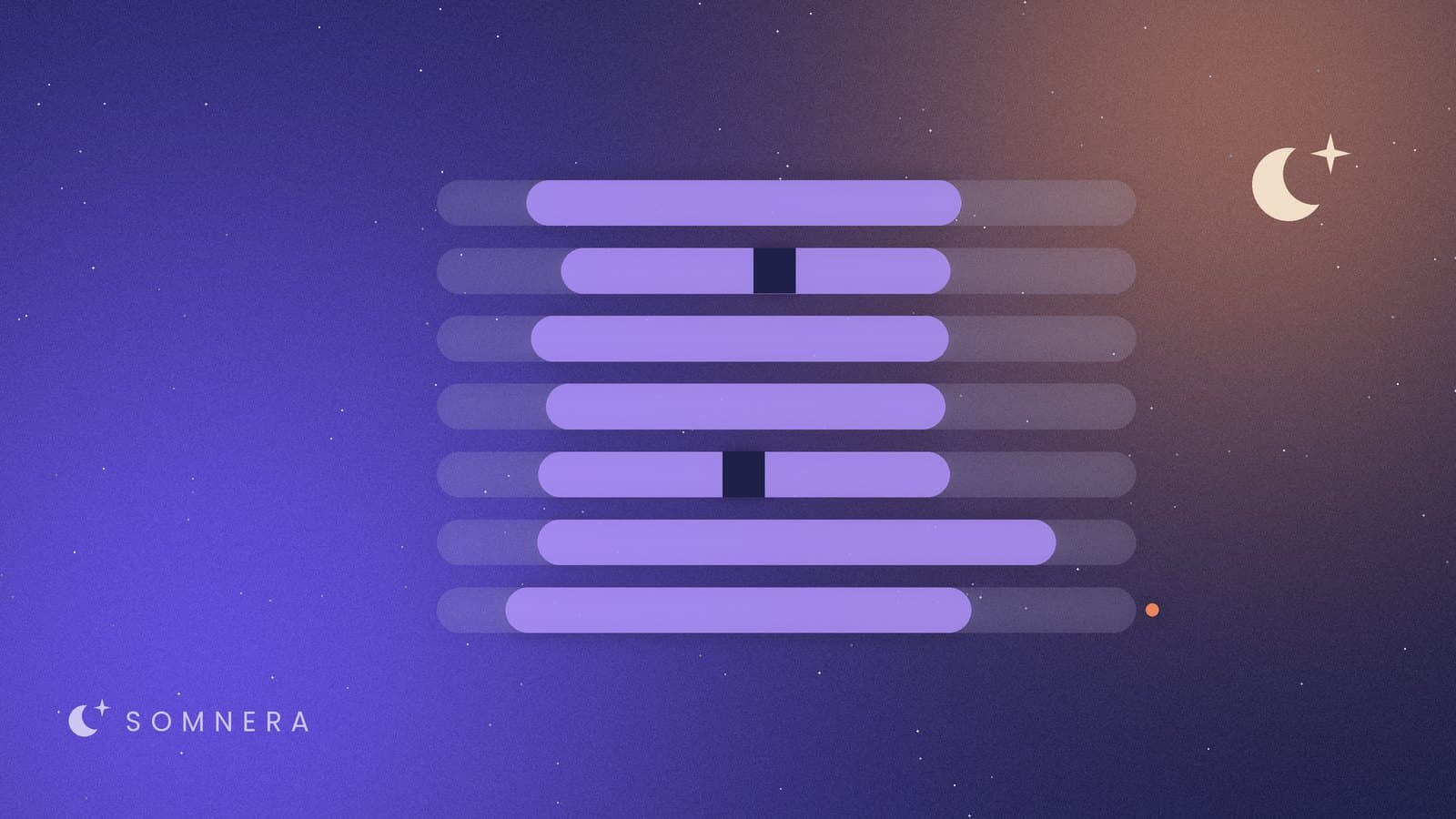
A sleep diary takes about a minute each morning, and it is the instrument every decision in CBT-I is made from. Five times and two estimates, written down while the night is fresh. Done well, it shows patterns that memory reliably gets wrong. Done badly, it is useless. Here is how to do it well.
For why it matters so much, see why the sleep diary is the part that actually does the work. This article is the practical version.
What to record
The standardized research version of a sleep diary - the Consensus Sleep Diary - was developed so that diaries across studies record the same things. The core of it is:
- What time you got into bed.
- What time you tried to go to sleep, if that was later - for example, if you read first.
- How long it took to fall asleep, roughly.
- How many times you woke during the night, and how long you were awake in total.
- What time you woke for the last time.
- What time you got out of bed.
Worth adding: any naps, caffeine and alcohol, any sleep medication taken, and a quick rating of how rested you feel. They often explain a bad night that otherwise looks random.
When to fill it in
Each morning, within an hour or so of getting up. Not during the night, which means looking at the clock. Not at the end of the week, by which point the nights have blurred together.
How to estimate without a clock
Rough is fine. The diary is designed for estimates, and the patterns that matter show up across a week even if individual nights are imprecise.
What you should not do is watch the clock during the night to make the diary more accurate. Clock-watching tends to increase arousal - the arithmetic of how many hours are left is reliably bad for sleep. Turn the clock away and estimate in the morning. More on the 2am clock.
What you get out of it
From a week or two of entries you can work out three numbers:
- Time in bed - from getting into bed to getting out of it.
- Total sleep time - time in bed, minus time taken to fall asleep, minus time awake in the night, minus time in bed after the final waking.
- Sleep efficiency - total sleep time divided by time in bed. What a good number looks like.
Those numbers are what the sleep window is calculated from, and what tells you when to widen it.