Somnera
CBT-I science

Sleep app vs CBT-I app: what's the difference for insomnia?

Trackers, sleep sounds, meditation and CBT-I programs all get called sleep apps. Only one of those categories is a treatment for insomnia.

5 min read

Last reviewed October 7, 2026

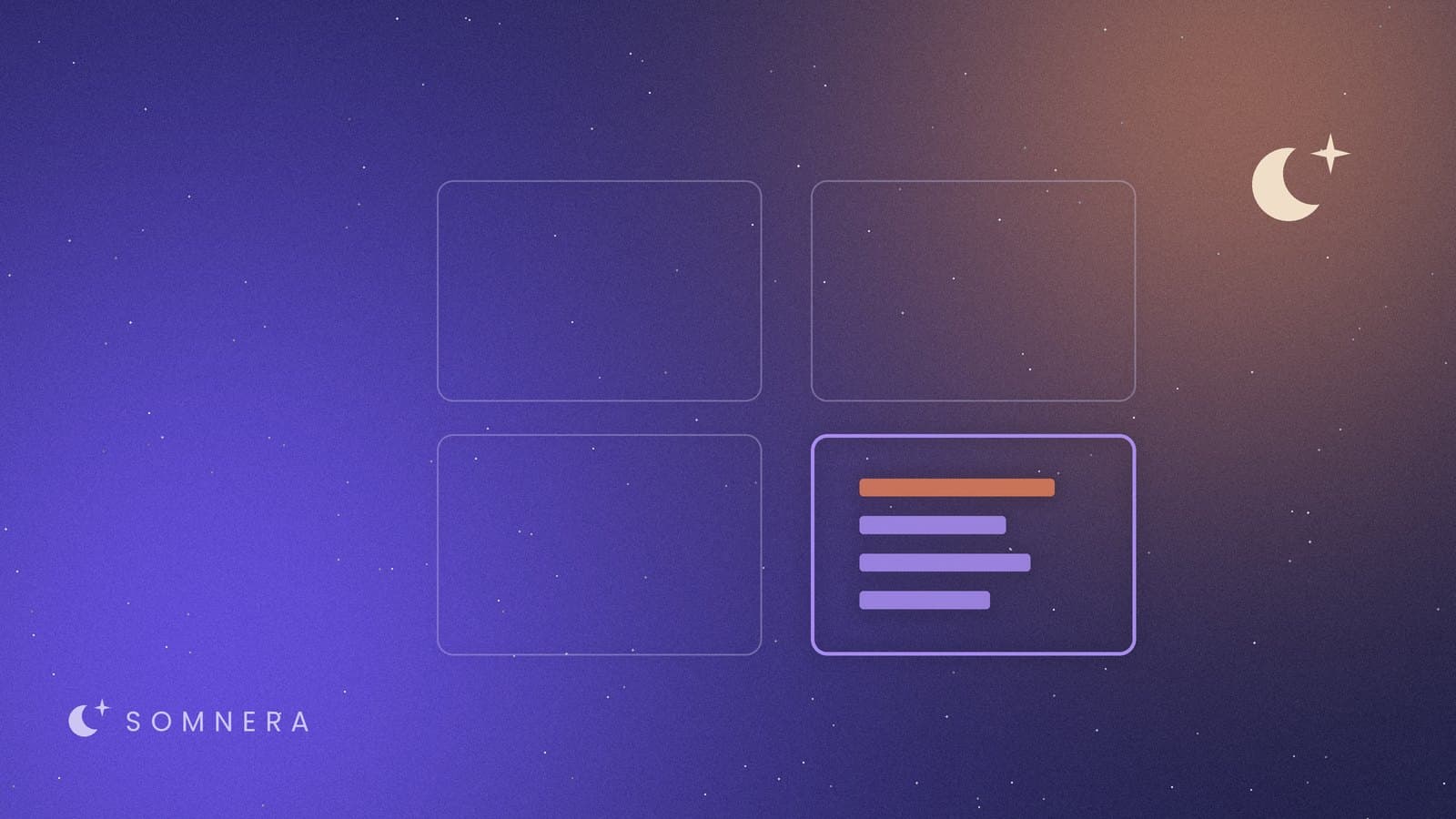
Four app tiles, with only one showing a structured daily program

Share

Not every sleep app is an insomnia treatment. Four quite different things get called "sleep apps": trackers that measure your night, sound and meditation apps that help you relax, general wellness apps with sleep tips, and CBT-I programs that deliver an actual treatment protocol. They are not interchangeable, and only the last one has the guideline evidence behind it for chronic insomnia.

Here is how to tell them apart.

At a glance

Type of appWhat it doesGuideline position for chronic insomnia
Sleep trackerMeasures and scores your sleepNot a recommended treatment
Sounds, stories, meditationHelps you relax and wind downRelaxation recommended conditionally, as one component
Wellness app with sleep tipsOffers sleep hygiene adviceRecommended against as a standalone treatment
CBT-I programDelivers the full CBT-I protocol over several weeksStrongly recommended (AASM); first-line in person or digitally (Europe)

The four kinds of sleep app

Sleep trackers

What they do: estimate how long and how well you slept, usually from movement and heart rate, and turn it into a nightly score.

What they do not do: change anything. A tracker is a measuring instrument. It can tell you that you slept badly, which you already knew.

The insomnia-specific problem: for people who already worry about sleep, a score can become one more thing to check and dread. One of the established models of insomnia describes exactly that loop: worry about sleep, monitoring for signs of trouble, and misjudging how much you slept, each feeding the next. A nightly number can slot straight into it.

CBT-I does measure sleep, but differently: with a sleep diary filled in each morning, used to make decisions rather than to grade you.

Sound, story and meditation apps

What they do: help you wind down with audio, guided breathing, body scans or stories.

Where they fit: relaxation is a real part of CBT-I, and the American Academy of Sleep Medicine recommends relaxation techniques for chronic insomnia - conditionally. Which techniques, and how they are used.

The limit: relaxation alone is a much weaker recommendation than the full program. It does not address the weak sleep drive or the conditioned wakefulness that keep chronic insomnia going. Calming audio can help you fall asleep on a given night; it is not built to change the pattern.

General wellness apps with sleep tips

What they do: offer advice on caffeine, screens, light, temperature and routine.

The limit: that is sleep hygiene, and the AASM recommends against sleep hygiene as a standalone treatment for chronic insomnia. It is sensible background advice. It is not what fixes a pattern.
Take the free assessment to see:

  • ✓Your Insomnia Severity Index (ISI) score
  • ✓A personalized 6-week CBT-I plan, built by a sleep physician
  • ✓How your sleep improves, night by night
Start free assessment

CBT-I programs

What they do: deliver the components of cognitive behavioral therapy for insomnia over several weeks - a nightly diary, a sleep window set and adjusted from your own data, stimulus control, cognitive work on sleep-related worry, and education.

The evidence: multicomponent CBT-I is the only strong recommendation in the AASM's behavioral guideline. The European guideline recommends it as first-line whether delivered in person or digitally. A large randomized trial of digital CBT-I found improvements in sleep, functional health and wellbeing, with the improvement in insomnia accounting for much of the effect on the other outcomes. What the evidence on online CBT-I shows.

The quick test

Apps in every category use the same words - "evidence-based", "science-backed", "clinically designed". The description will not tell you which category you are looking at. The features will. A real CBT-I program has:

  • a sleep diary you fill in every morning;
  • a sleep window calculated from that diary and adjusted week by week;
  • stimulus control instructions - what to do when you cannot sleep;
  • cognitive work on the worry and beliefs that keep insomnia going;
  • a defined, multi-week structure.

If the sleep window is missing, or is set from what time you would like to wake up rather than from what you actually slept, the most powerful part of CBT-I is not there. The full checklist for choosing between CBT-I apps covers cost, who built it, and what happens to your data.

Before you pay for any app

The most common complaint about sleep apps is not about whether they work. It is about billing: a low introductory price, then a charge people did not expect once a trial ended. Before you enter card details, find out three things:

  • What happens when the trial or the program ends - does it renew, and at what price?
  • Who built it - is a credentialed clinician named, or only described?
  • What happens to your data - sleep and mood data are personal health information.

If a company has made any of those hard to find, that is the answer. What CBT-I actually costs.

Which do you need?

If you sleep well most nights and want to wind down better, a relaxation app is fine. If you want to see your sleep, a tracker will show it to you. If you have had trouble sleeping on three or more nights a week for months, those are not the tools for the job - CBT-I is, and the rest of this section covers what it involves.

Somnera is a self-guided education program built on CBT-I, founded and written by Dr. Camilo Ruiz, DO, FACOI, FAASM. It is not a diagnosis and does not replace care from your own clinician. The assessment is free and takes about two minutes.

Citations

  • Edinger JD, et al. Behavioral and psychological treatments for chronic insomnia disorder in adults: an American Academy of Sleep Medicine clinical practice guideline. J Clin Sleep Med. 2021;17(2):255–262. doi:10.5664/jcsm.8986
  • Riemann D, et al. The European Insomnia Guideline: an update on the diagnosis and treatment of insomnia 2023. J Sleep Res. 2023;32(6):e14035. doi:10.1111/jsr.14035
  • Espie CA, et al. Effect of digital cognitive behavioral therapy for insomnia on health, psychological well-being, and sleep-related quality of life: a randomized clinical trial. JAMA Psychiatry. 2019;76(1):21–30. doi:10.1001/jamapsychiatry.2018.2745
  • Harvey AG. A cognitive model of insomnia. Behav Res Ther. 2002;40(8):869–893. doi:10.1016/s0005-7967(01)00061-4
  • Carney CE, et al. The Consensus Sleep Diary: standardizing prospective sleep self-monitoring. Sleep. 2012;35(2):287–302. doi:10.5665/sleep.1642

Frequently asked questions

For chronic insomnia, the guidelines recommend CBT-I, and the European guideline recognizes digital delivery as first-line. An app that delivers the actual CBT-I components - a sleep diary, sleep restriction, stimulus control and cognitive work - is a different category from a tracker or a relaxation app.

A tracker measures sleep; it does not change it. For some people with insomnia, a nightly score becomes one more thing to worry about. Tracking is not a recommended treatment for chronic insomnia.

Relaxation can be a useful part of CBT-I, and the AASM recommends relaxation techniques conditionally. On its own it is a much weaker recommendation than the full multicomponent program.

Look for a sleep diary that sets and adjusts a sleep window from your own data, stimulus control instructions, cognitive work on sleep-related worry, and a defined multi-week structure. If those are missing, it is probably not CBT-I, whatever the description says.