Somnera
Getting help

What is insomnia? When a bad stretch becomes a disorder

Everyone sleeps badly sometimes. Insomnia has a specific definition: how often, for how long, and what it does to your day. Here is where the line sits.

4 min read

Last reviewed October 7, 2026

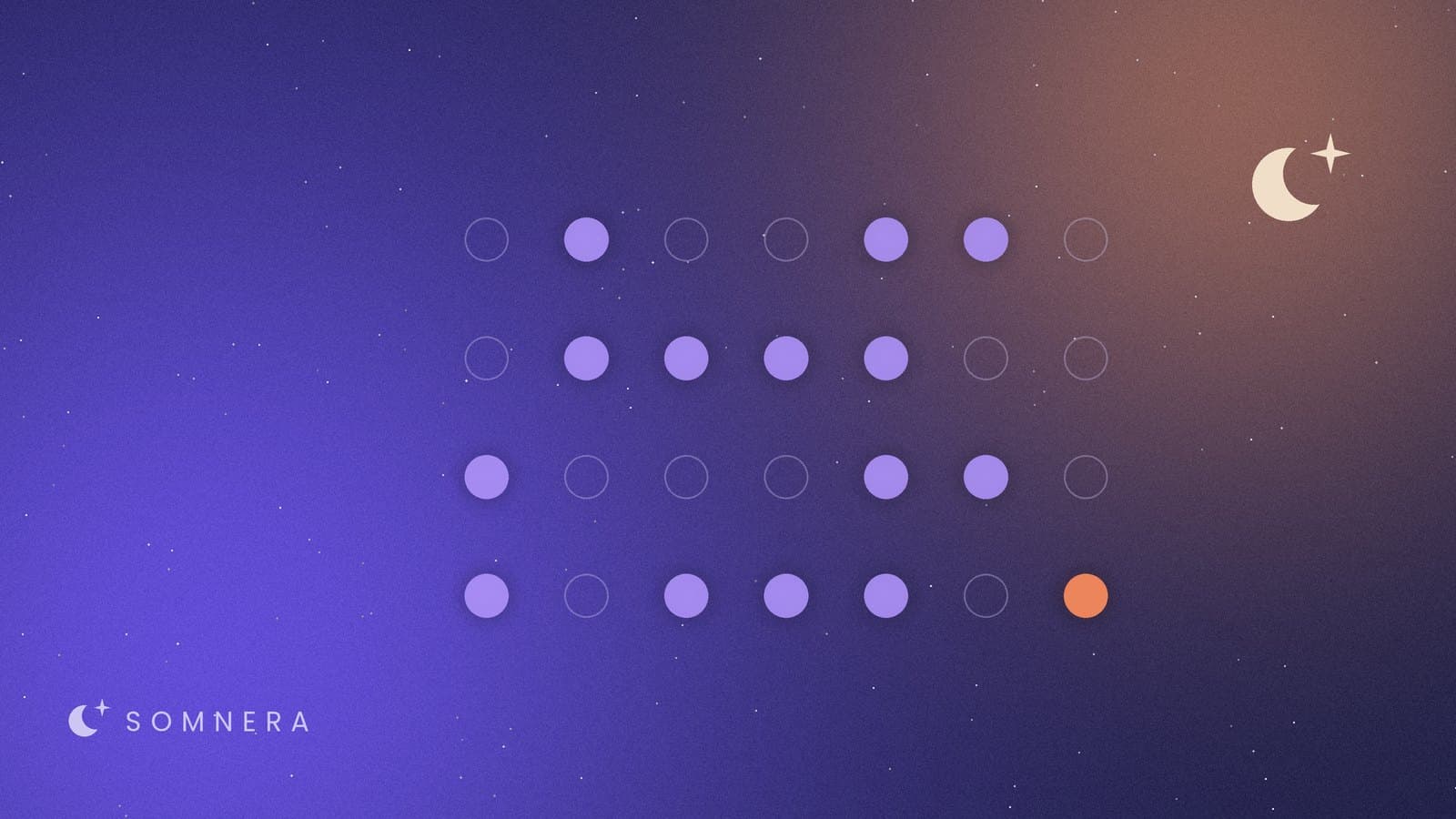
A calendar grid of dots with several nights in each week filled in

Share

Insomnia is difficulty falling asleep, staying asleep, or waking too early - despite having the chance to sleep - with consequences for how you feel and function during the day. When that happens on three or more nights a week for three months or more, it is chronic insomnia, a recognized disorder with its own treatment guidelines.

That definition is more specific than "sleeping badly," and the specifics matter, because they separate ordinary bad nights from a pattern worth treating.

The three parts of the definition

1. A sleep problem

Trouble falling asleep, trouble staying asleep, or waking earlier than intended and being unable to get back to sleep. Many people have more than one. How the patterns differ.

2. Despite the opportunity to sleep

Insomnia is not the same as not having time to sleep. Someone working two jobs who gets five hours because that is all there is has insufficient sleep, not insomnia. Insomnia is lying in bed with the time and still not sleeping.

3. Daytime consequences

Fatigue, difficulty concentrating, irritability, low mood, worry about sleep. Some people sleep little and feel fine; the definition is about distress and impairment, not hitting a number of hours.

When it becomes chronic

The diagnostic threshold for chronic insomnia is three or more nights a week, for three months or more.

Below that, a bad stretch is a bad stretch - stress at work, an illness, a new baby, a time-zone change. Short bouts of poor sleep are part of normal life and often settle once the trigger passes.

Above that threshold, insomnia tends to be held in place by habits and learned responses rather than by whatever started it: extra time in bed to catch up, a bed that has become associated with being awake, and worry about sleep. That is why chronic insomnia often continues long after its original cause has gone, and why it responds to treatment that targets those patterns. How CBT-I targets them.
Take the free assessment to see:

  • ✓Your Insomnia Severity Index (ISI) score
  • ✓A personalized 6-week CBT-I plan, built by a sleep physician
  • ✓How your sleep improves, night by night
Start free assessment

Short-term vs chronic insomnia

Short-termChronic
How oftenVariesThree or more nights a week
How longLess than three monthsThree months or more
Usually driven byA trigger - stress, illness, travel, a life changeHabits and learned responses that outlast the trigger
Recommended first stepOften settles once the trigger passesCBT-I, per the guidelines

How common it is

Chronic insomnia affects roughly 6 to 10% of adults, according to the American College of Physicians. Occasional poor sleep affects far more people than that.

How it is measured

The most widely used measure is the Insomnia Severity Index, a seven-item questionnaire scored from 0 to 28. The bands are 0–7, no clinically significant insomnia; 8–14, subthreshold; 15–21, moderate; and 22–28, severe. It measures distress and daytime impact as well as the night itself. What your ISI score means.

What else it could be

Poor sleep is sometimes driven by something other than insomnia, and those need different treatment:

  • Sleep apnea - loud snoring, gasping, witnessed pauses in breathing, waking unrefreshed. Do you need a sleep study?
  • A body clock running late - consistently unable to sleep until very late and unable to wake until late, regardless of effort.
  • Depression or anxiety, which have a two-way relationship with insomnia. Insomnia and depression.
  • Pain, other medical conditions, or medication side effects.

Insomnia can also exist alongside any of these. When to see a sleep specialist.

What to do about it

For chronic insomnia, the guidelines in the US and Europe recommend cognitive behavioral therapy for insomnia as the first-line treatment. What CBT-I is, and how it compares with the other options. The rest of this section covers getting help.

Somnera is a self-guided education program built on CBT-I, founded and written by Dr. Camilo Ruiz, DO, FACOI, FAASM. It is not a diagnosis and does not replace care from your own clinician. The assessment is free and takes about two minutes.

Citations

  • Qaseem A, et al. Management of chronic insomnia disorder in adults: a clinical practice guideline from the American College of Physicians. Ann Intern Med. 2016;165(2):125–133. doi:10.7326/M15-2175
  • Morin CM, Belleville G, Bélanger L, Ivers H. The Insomnia Severity Index: psychometric indicators to detect insomnia cases and evaluate treatment response. Sleep. 2011;34(5):601–608. doi:10.1093/sleep/34.5.601
  • Bastien CH, Vallieres A, Morin CM. Validation of the Insomnia Severity Index as an outcome measure for insomnia research. Sleep Med. 2001;2(4):297–307. doi:10.1016/s1389-9457(00)00065-4
  • Edinger JD, et al. Behavioral and psychological treatments for chronic insomnia disorder in adults: an American Academy of Sleep Medicine clinical practice guideline. J Clin Sleep Med. 2021;17(2):255–262. doi:10.5664/jcsm.8986
  • Riemann D, et al. The European Insomnia Guideline: an update on the diagnosis and treatment of insomnia 2023. J Sleep Res. 2023;32(6):e14035. doi:10.1111/jsr.14035

Frequently asked questions

Difficulty falling asleep, staying asleep, or waking too early, despite having the opportunity to sleep, together with daytime consequences such as fatigue, poor concentration or low mood.

Insomnia that happens on three or more nights a week and has lasted for three months or more. That is the threshold used in the diagnostic criteria, and it is the population clinical guidelines and trials are built on.

Chronic insomnia affects roughly 6 to 10% of adults, according to the American College of Physicians. Occasional poor sleep is far more common than that.

Yes. Chronic insomnia disorder is a recognized diagnosis in the major classification systems, with its own clinical guidelines. It is not just a symptom of stress or a matter of willpower.

More in Getting help