The Insomnia Severity Index is a seven-item questionnaire scored from 0 to 28. It takes about two minutes, it is one of the most widely used measures in sleep research, and it is almost certainly the thing you filled in if a sleep program or a clinic asked you a short set of questions before anything else.
What surprises most people is what it asks about. It is not a measure of how much you sleep.
What the seven items actually measure
The instrument was developed by Charles Morin and colleagues, and the version in common use has seven items rated on a five-point scale, each scored 0 to 4. Between them they cover:
- Difficulty falling asleep.
- Difficulty staying asleep.
- Waking too early.
- How satisfied or dissatisfied you are with your current sleep pattern.
- How noticeable you think the problem is to other people, in terms of your quality of life.
- How worried or distressed you are about it.
- How much it interferes with daily functioning.
Four of those seven are not about the night at all. Satisfaction, noticeability, worry and daytime interference are about what the problem costs you, and they are weighted equally with the sleep-difficulty items.
That design is deliberate, and it is the single most useful thing to understand about the score. Two people can sleep exactly the same number of hours and land in different bands, because insomnia as a disorder is defined by distress and daytime consequence, not by a threshold number of hours. Someone who sleeps five hours and is untroubled by it does not have insomnia. Someone who sleeps six and a half and spends every evening dreading bedtime may well.
The four bands
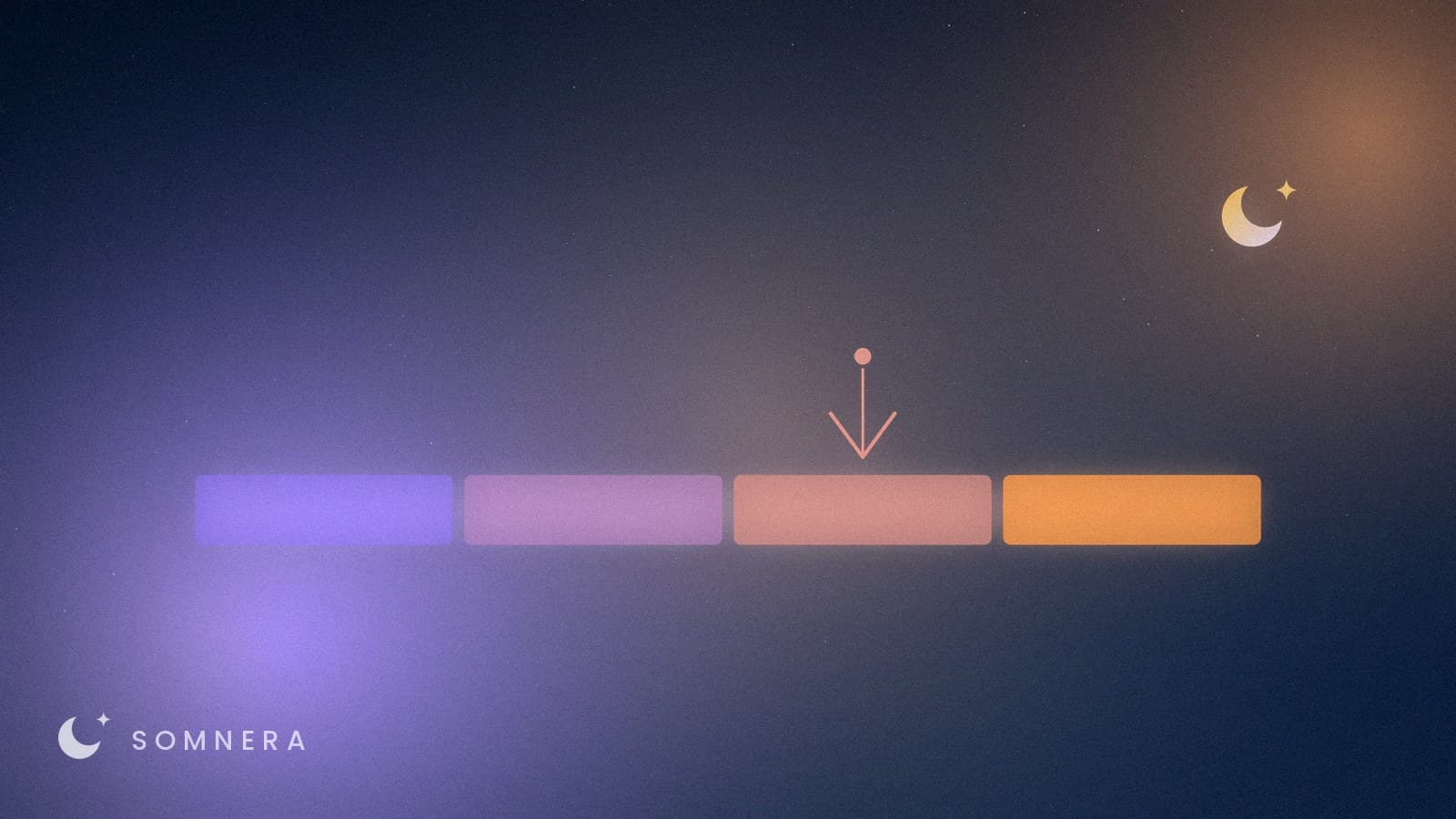
Scores are summed across the seven items for a total out of 28, and interpreted in four ranges.
0–7: no clinically significant insomnia
The range most people without a sleep complaint fall into. It does not mean flawless sleep — bad nights happen to everyone — but the difficulty is not at a level the measure treats as significant, and it is not costing much in the daytime.
If you scored here and still feel exhausted, that is worth paying attention to rather than dismissing. Persistent daytime sleepiness alongside a low insomnia score points away from insomnia and toward something else, and sleep apnea is the most common candidate.
8–14: subthreshold insomnia
Real difficulty that has not reached the clinical range. This band covers a lot of ground: people early in a problem, people managing it well enough that it has not taken over the day, and people who have had it long enough to have stopped noticing how much they have rearranged around it.
It is also the band where behavioral change tends to be least unpleasant, because there is less to unwind.
15–21: moderate clinical insomnia
The range where the problem is generally described as clinical. Nights are difficult several times a week, the daytime cost is noticeable, and worry about sleep has usually become part of the picture rather than a reaction to it.
This is the band most people arrive at a structured program with.
22–28: severe clinical insomnia
Substantial difficulty with substantial daytime consequence. Worth taking to a clinician rather than working through alone — not because a program is unsafe at this level, but because scores this high more often sit alongside something else that deserves its own attention, whether that is another sleep disorder, a mood disorder, pain, or a medication.