Somnera
CBT-I science

CBT-I apps: what they are, what they do, and who they suit

A CBT-I app is a structured program, not a sleep tracker. What a real one delivers, what the first weeks feel like, and who should talk to a doctor first.

9 min read

Last reviewed October 14, 2026

Four overlapping circles on a night-sky background, one for each part of CBT-I

Share

A CBT-I app is a self-guided version of cognitive behavioral therapy for insomnia: a structured program you work through over several weeks, not a gadget that scores your nights. The good ones deliver the same method a sleep clinician would use in the office, adapted so you can follow it at home. The weak ones borrow the name and deliver sleep tips.

This page covers what a real CBT-I app does, what the weeks actually look like, who it suits, who should speak to a doctor before starting, and how to tell the difference between a program and a tracker. If you are already comparing specific options, the questions to ask when choosing one are on their own page.

What a CBT-I app is

CBT-I is a short, structured therapy that works on the habits and thoughts that keep insomnia going once it has started. What CBT-I is, in full. It was developed to be delivered by a trained clinician over a handful of sessions, and for a long time that was the only way to get it.

The trouble is access. There are far too few trained CBT-I clinicians for the number of people with chronic insomnia, and many people live nowhere near one. Digital CBT-I — sometimes called dCBT-I — exists to close that gap. An app takes the same sequence of steps, puts the teaching into short lessons, and uses your own diary entries to make the decisions a clinician would otherwise make with you.

So when people search for an "app for insomnia," it helps to know that two very different things answer to that description. One kind helps you relax or measures your sleep. The other kind asks you to change how you sleep, on a schedule, for several weeks. Only the second is CBT-I.

What a real CBT-I app delivers

CBT-I is a package, and the research is on the package. An app that delivers only one piece of it is not giving you the method that was studied. These are the parts to look for.

A daily sleep diary

Every decision in CBT-I comes from a sleep diary: a short entry each morning recording when you went to bed, roughly how long it took to fall asleep, how long you were awake in the night, and when you got up. It takes a minute or two. It matters because memory of a bad night is unreliable, and the diary is what everything else is built on.

Sleep restriction and a personal sleep window

This is the core, and the part most often left out. Using your diary, the program narrows the time you spend in bed to roughly match the sleep you are actually getting, then widens it as your sleep becomes more solid. The result is a sleep window: a set bedtime and a set wake time that belong to you, not a generic recommendation. How sleep restriction works, and how the window is calculated.

Stimulus control

If you have been lying awake for a while, you get up, do something quiet elsewhere, and come back when you feel sleepy. The bed goes back to being a place for sleep, not for worrying, scrolling or watching the clock. It is simple to describe and hard to do at 2 a.m., which is why a program reminds you of it repeatedly. Why getting out of bed helps.

Cognitive work

Insomnia comes with a set of thoughts that make it worse: that a bad night will ruin tomorrow, that you have lost the ability to sleep, that you must sleep now. A CBT-I app works through those thoughts with you, not to argue you into calm, but to lower the pressure that keeps you alert in bed.

Sleep hygiene, as a minor part

Caffeine timing, a dark room, a wind-down routine. These are reasonable background habits and a decent program mentions them. But the guidelines recommend against sleep hygiene as a standalone therapy. If it is most of what an app offers, it is not offering CBT-I.

Relapse prevention

Insomnia can return during stress, illness or travel. The last part of a good program teaches you what to do when a run of bad nights starts — usually going back to the diary and tightening the window for a while — so a rough week does not turn back into a rough year.

What six weeks of digital CBT-I typically look like

Programs differ in detail, but the order is usually similar, because each step depends on the one before it. The full week-by-week walkthrough goes further; here is the outline.

  • Week 1 — Measure. You learn how insomnia keeps itself going, start the diary, and choose one steady wake time for every day, weekends included. Nothing else changes yet.
  • Week 2 — Set the window. The diary is used to set your first sleep window. Stimulus control starts. This is usually the hardest week.
  • Week 3 — Adjust. Your sleep usually starts to consolidate. If the diary shows you are sleeping most of the time you spend in bed, the window widens a little.
  • Week 4 — The thinking. With the behavioral pieces in place, the focus moves to the worries and beliefs that keep you alert at night.
  • Week 5 — Keep adjusting. The window continues to move with your diary, toward the amount of sleep you actually need.
  • Week 6 — Hold it. You put together a plan for bad patches, so you know exactly what to do if insomnia returns.

Six weeks is a structure, not a deadline. People who take longer do fine as long as the wake time stays steady and the diary keeps going.

What the first two weeks feel like

Honestly: often worse before better. That is the part apps tend to underplay, and it is the part that decides whether you finish.
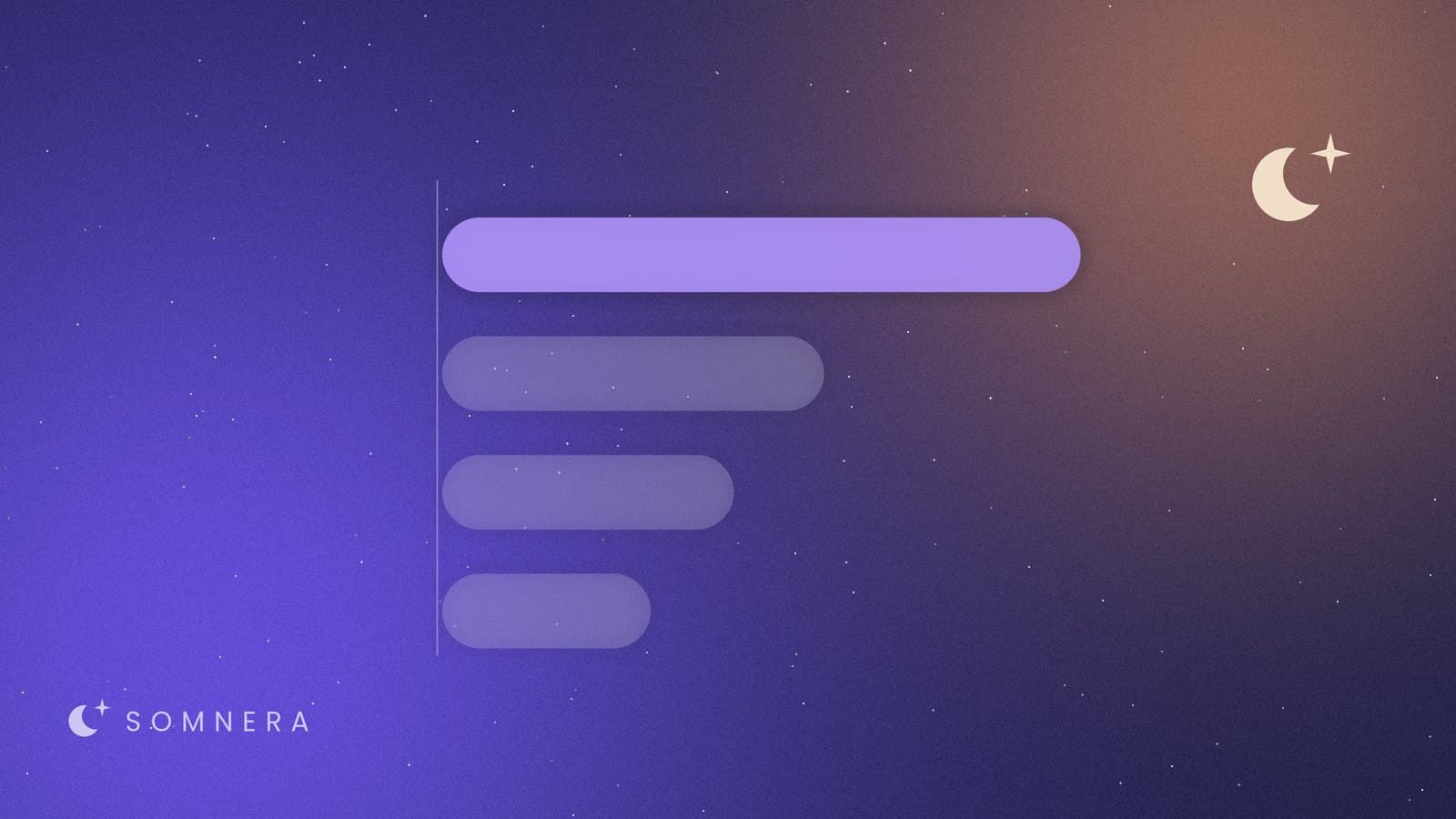
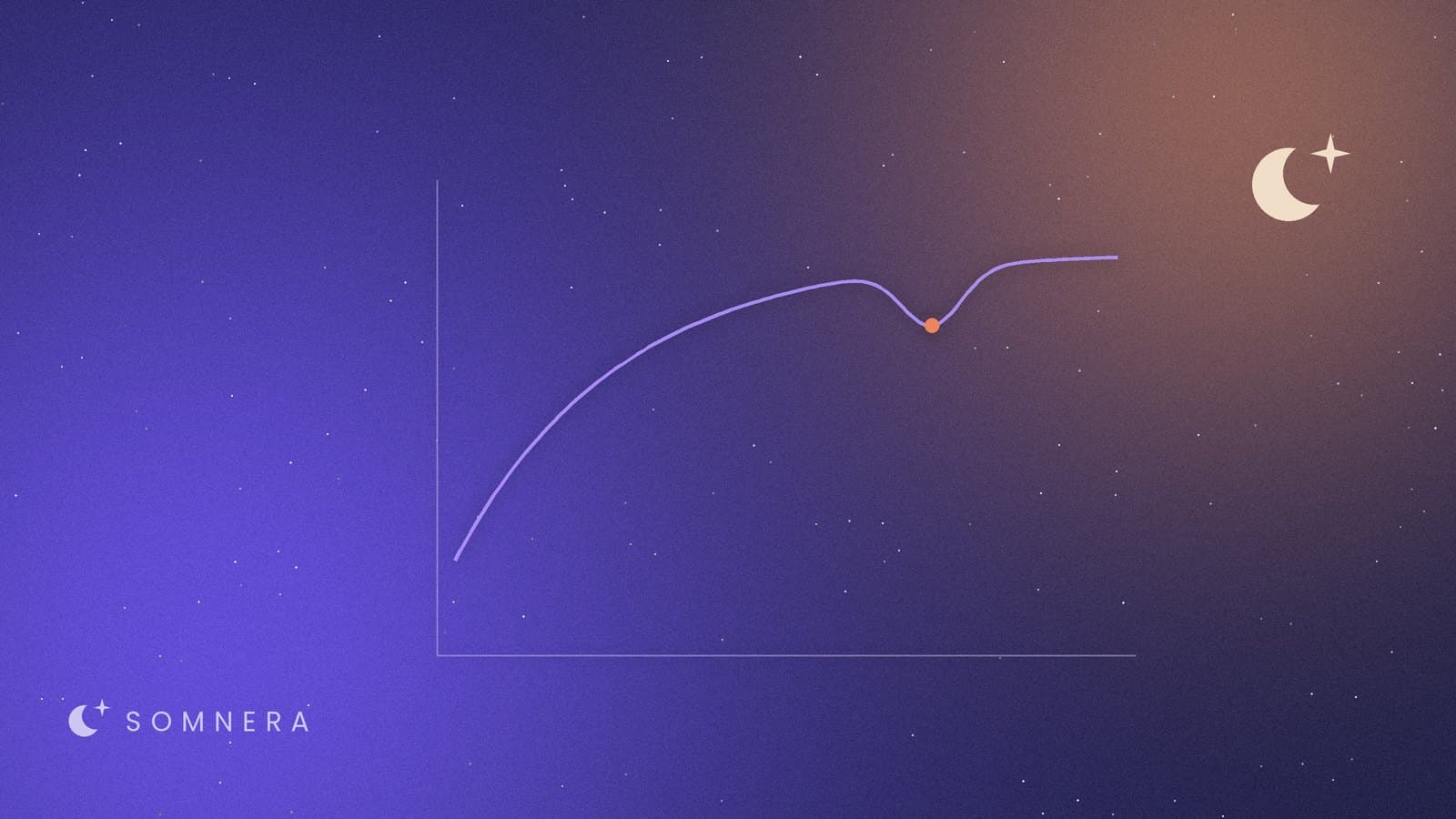
Week one is mostly measuring, which can feel like nothing is happening. Then, once the window is set, you spend less time in bed than you are used to. Your sleep pressure builds, which is the point, but in the short term you may feel more tired during the day. Many people find this the moment they want to stop.

A few things help:

  • Know it is coming. Daytime sleepiness in the early weeks is an expected effect of the method, not a sign that it is failing.
  • Protect the wake time. It is the anchor. Sleeping in after a bad night undoes the pressure you built.
  • Be careful with driving and machinery. If you feel drowsy, do not drive. This is a real safety point, not a formality.
  • Keep the diary even on bad nights. Those entries are what the window is adjusted from.

If you are well into the program and still not seeing change, here is what to check when sleep restriction does not seem to be working.

Who a CBT-I app suits

A self-guided program tends to suit people who:

  • Have had trouble falling or staying asleep for months rather than days.
  • Can keep a short diary every morning and stick to a set wake time.
  • Want a method that changes the pattern itself, rather than something to manage it night by night.
  • Cannot easily get to a CBT-I clinician, or would rather work at their own pace.

It suits people less well if they want someone to check in with them each week, or if they already know motivation is the sticking point. In that case a therapist, or a program with more human contact, may be worth the extra cost. Self-guided CBT-I versus a therapist, side by side.

Who should talk to a doctor first

Sleep restriction asks you to spend less time in bed for a while, and for some people that needs a clinician's input before starting. Speak to your doctor first if any of these apply to you:

  • Possible sleep apnea — loud snoring, gasping or choking in the night, or someone noticing you stop breathing. When a sleep study makes sense.
  • Bipolar disorder — reducing sleep can trigger mood episodes.
  • A seizure disorder — sleep loss can lower the seizure threshold.
  • Pregnancy.
  • Shift work — a steady sleep window may not be possible on a rotating schedule, and the program needs adapting.
  • Drowsy driving — if you have nodded off at the wheel, or your job involves driving or safety-critical work.

If you take sleep medication, a CBT-I program does not ask you to stop, and you should not change it on your own. Talk to your prescriber.

None of this means CBT-I is off the table. It means the plan should be shaped with someone who knows your health. When to see a sleep specialist and how to raise insomnia with your doctor are good places to start.

CBT-I app vs therapist vs sleep tracker

CBT-I appCBT-I therapistSleep tracker
What it doesGuides you through the CBT-I method using your diaryDelivers CBT-I in person or by video, tailored liveRecords and estimates your sleep
Changes behavior?Yes, on a scheduleYes, with personal follow-upNot by design
AccessStart today, anywhereOften a waiting list, limited by locationStart today
Who keeps you on trackYou, with the program's structureA clinicianNo one
CostUsually lowerUsually higher, sometimes covered by insuranceVaries

Digital CBT-I has been studied in randomized trials and produces meaningful improvement in sleep; what the research on online CBT-I shows. Comparisons generally favor a trained therapist somewhat, but the availability difference is large. For many people the realistic choice is not app versus therapist but app versus nothing. If cost is part of the decision, whether insurance covers CBT-I and how to find a CBT-I therapist are worth reading too.

How to tell a real CBT-I app from a sleep tracker

Plenty of products describe themselves in language that sounds like therapy. A few checks cut through it quickly. The longer comparison of sleep apps and CBT-I apps covers this in depth.

  • Does it set you a sleep window from your own diary? If it never tells you when to go to bed and when to get up, it is not delivering sleep restriction.
  • Does it ask you to do anything? A tracker asks you to wear or open something. A CBT-I app asks you to change your behavior.
  • Is there a beginning and an end? CBT-I is a course with a sequence. An endless feed of content is a different product.
  • Who built it? Look for a named sleep clinician, not an anonymous expert panel.
  • Does it warn you about the hard part? A program that is honest about the early weeks, and about who should see a doctor first, is more likely to be the real thing.

As for the "best CBT-I app": there is no ranking that holds for everyone. The best one for you is the one that delivers the full method, was built by people qualified to build it, has pricing you understand up front, and that you will actually finish.

How Somnera does it

Somnera is a six-week, self-guided CBT-I program built with Dr. Camilo Ruiz, a board-certified sleep physician. It follows the structure described above:

  • A short sleep diary each morning.
  • A personal sleep window calculated from your own diary, adjusted as your sleep changes.
  • Short lessons on stimulus control, the thinking that keeps you awake, and what to do when a bad patch comes back.
  • A safety screen at the start that asks about the conditions listed above, so you know if you should speak to a doctor before beginning.

Somnera is educational. It is not a diagnosis or a medical service, and it does not replace care from your own doctor. What it offers is the CBT-I method, laid out clearly, with the decisions built from your own sleep.

You can start with the free sleep assessment, which takes a few minutes and needs no card. The six-week program is $79.99. Exactly what is included, and how to get the most out of it if you decide to start.

Frequently asked questions

A CBT-I app delivers cognitive behavioral therapy for insomnia as a structured, self-guided program: a daily sleep diary, a personal sleep window, stimulus control, and work on the thinking that keeps you awake. It is a course you follow, not a tool that records your nights.

There is no single best one for everyone. The useful question is whether an app delivers the full method — especially sleep restriction built from your own diary — whether a named sleep clinician built it, and whether its pricing is clear. If it does those things, the rest is preference.

Digital CBT-I has been studied in randomized trials and produces meaningful improvement in sleep. The evidence belongs to the method; any individual app is only as good as how faithfully it delivers it.

No. A tracker measures your sleep. A CBT-I app asks you to change what you do around sleep, using your own diary to decide how. Some apps do a little of both; many do only the measuring.

Because the sleep window is usually set then, and a shorter time in bed means more daytime sleepiness before sleep consolidates. That dip is expected, and it is when most people quit.

Many people do, but any change to a medication is a decision for you and the person who prescribed it. Talk to your prescriber before changing anything.