Somnera
Sleep restriction

How much sleep do I need? Why the answer is not always 8 hours

Sleep needs vary by age and by person. What the official recommendations say, how to tell if you are getting enough, and why chasing eight hours can make insomnia worse.

9 min read

Last reviewed October 17, 2026

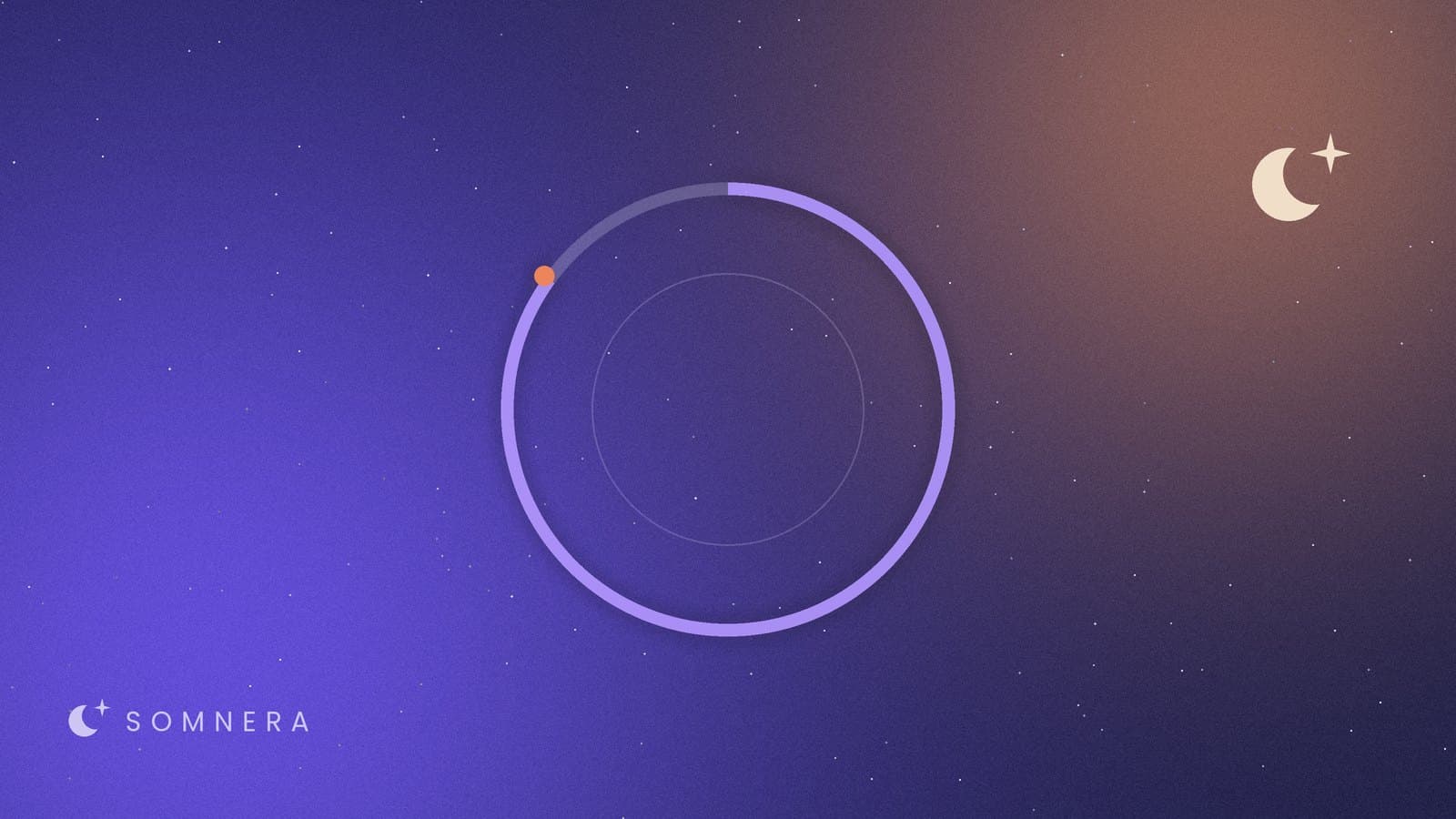
A ring gauge filled most of the way around, with the end point marked

Share

Most adults need somewhere around seven hours of sleep or more, but your own number depends on your age and on you - and how you feel during the day tells you more than any figure on a sleep tracker. For people with insomnia, the question "how much sleep do I need?" can quietly become part of the problem.

Picture it. It is the middle of the night. You have been awake for what feels like hours. Some part of your brain, unasked, is running the numbers: if I fall asleep right now, that is barely half of eight. Half is not enough. Half is a disaster. Tomorrow is the meeting. The arithmetic is accurate. It is also about the least sleep-friendly thing a mind can do at that hour, like trying to calm down by reading your own bank statement.

So let us do the arithmetic properly, once, in daylight - and then talk about why you might want to stop doing it at night.

How much sleep do you need? Sleep needs by age

There is a real, evidence-based answer to the population-level version of this question. The CDC's recommendations for hours of sleep per day, which draw on consensus statements from the American Academy of Sleep Medicine and the National Sleep Foundation, are as follows for teens and adults:

Sleep needs by age (CDC recommendation)
Age group Recommended hours per day
Teen, 13–17 years8–10 hours
Adult, 18–60 years7 or more hours
Adult, 61–64 years7–9 hours
Adult, 65 years and older7–8 hours
Sleep needs by age for teens and adults, quoted from the CDC. The CDC page also lists recommendations for newborns and children.

Notice what the adult row actually says: 7 or more hours. Not "exactly eight." Not "eight or you have failed." It is a floor for a population, with plenty of room above it, and the ranges for older adults are ranges for a reason.

Within those ranges, individuals differ. Some people genuinely do well at the lower end; others feel noticeably better at the higher end. Need also shifts across life - a teenager who could sleep until noon and a retiree who wakes bright at dawn are not doing it wrong, they are doing it at different ages. The recommendation is the map. Your own days are the territory.

The 8 hours of sleep myth

Eight hours is not a myth in the sense of being made up. It sits comfortably inside the recommended adult range, and as a rough cultural shorthand it does a decent job. The myth is the next step: that eight is a personal target, that everyone needs exactly that, and that anything less is damage.

That version of the idea causes trouble in two directions. People who naturally sleep a bit less spend years convinced they are broken. And people with insomnia take a reasonable average and turn it into a nightly exam they have to pass - an exam with no study guide, held in the dark, invigilated by their own anxiety.

It is worth separating two questions that tend to get blurred together:

  • How much sleep do I need? A biological question, with a broad answer that varies by person and age.
  • How much time should I spend in bed? A practical question, and for people with insomnia, often a very different answer.

We will come back to the second one. It is where things get counterintuitive.

How to tell if you're getting enough sleep

The most useful measure of whether you are sleeping enough is not a number at all. It is your day.

Ask yourself, honestly, over a typical week rather than after one rough night:

  • Can you get going in the morning without feeling like you are wading through wet cement for hours?
  • Do you stay reasonably alert through the afternoon, or does the mid-afternoon meeting feel like a hostage situation?
  • Do you nod off when sitting quietly - reading, watching TV, as a passenger? Or, more seriously, while driving?
  • Is your concentration and mood roughly where you would expect, or are you snapping at the toaster?

If the answers are mostly fine, you are probably getting close to what you need, whatever the tracker says. If they are not, it is worth looking at both how much you sleep and how well. The symptoms of insomnia are a useful checklist.

One detail matters a lot for people with insomnia: tired is not the same as sleepy. Many people with insomnia feel exhausted, flat and wrung out during the day, yet cannot nap even when given the chance. That is a different picture from someone who falls asleep the moment they sit down. The first often points to the hyperarousal that runs through insomnia; the second suggests genuine sleep loss, or something else worth checking. Why you can feel exhausted and still not sleep.

Is 6 hours of sleep enough?

This is one of the most searched versions of the question, and the honest answer is: it depends what the six hours look like, and how you feel after them.

Six hours sits below the CDC's adult recommendation, so if that is your regular total and your days are a struggle, it deserves attention. But six hours in one solid block, waking reasonably refreshed, is a very different night from six hours scattered across nine hours in bed, with long stretches of staring at the ceiling in between. The total is the same. The experience - and what to do about it - is not. That difference is what sleep efficiency measures.
Why fixating on 8 hours backfires with insomnia

Here is the cruel twist. The harder you try to get enough sleep, the less likely you are to get it.

Sleep is not something you can do on purpose, the way you can do a push-up. It is something that happens to you when the conditions are right - and one of those conditions is not caring very much whether it happens. Effort, monitoring and urgency are all forms of arousal, and arousal is the opposite of what the brain needs to let go. Sleep researchers call this sleep effort, and it is one of the engines that keeps chronic insomnia running.

A fixed number makes sleep effort worse in a few specific ways:

  • It creates a deadline. If eight is the target, every minute awake after a certain time shrinks what is left. Hello, middle-of-the-night arithmetic.
  • It raises the stakes of every night. A night that falls short is not just a night - it is evidence of failure, and a forecast of a terrible tomorrow.
  • It drives compensating habits. Going to bed earlier "to give yourself a chance," lying in, napping. Each one feels like protecting sleep. Together, they spread a modest amount of sleep across far more time in bed.

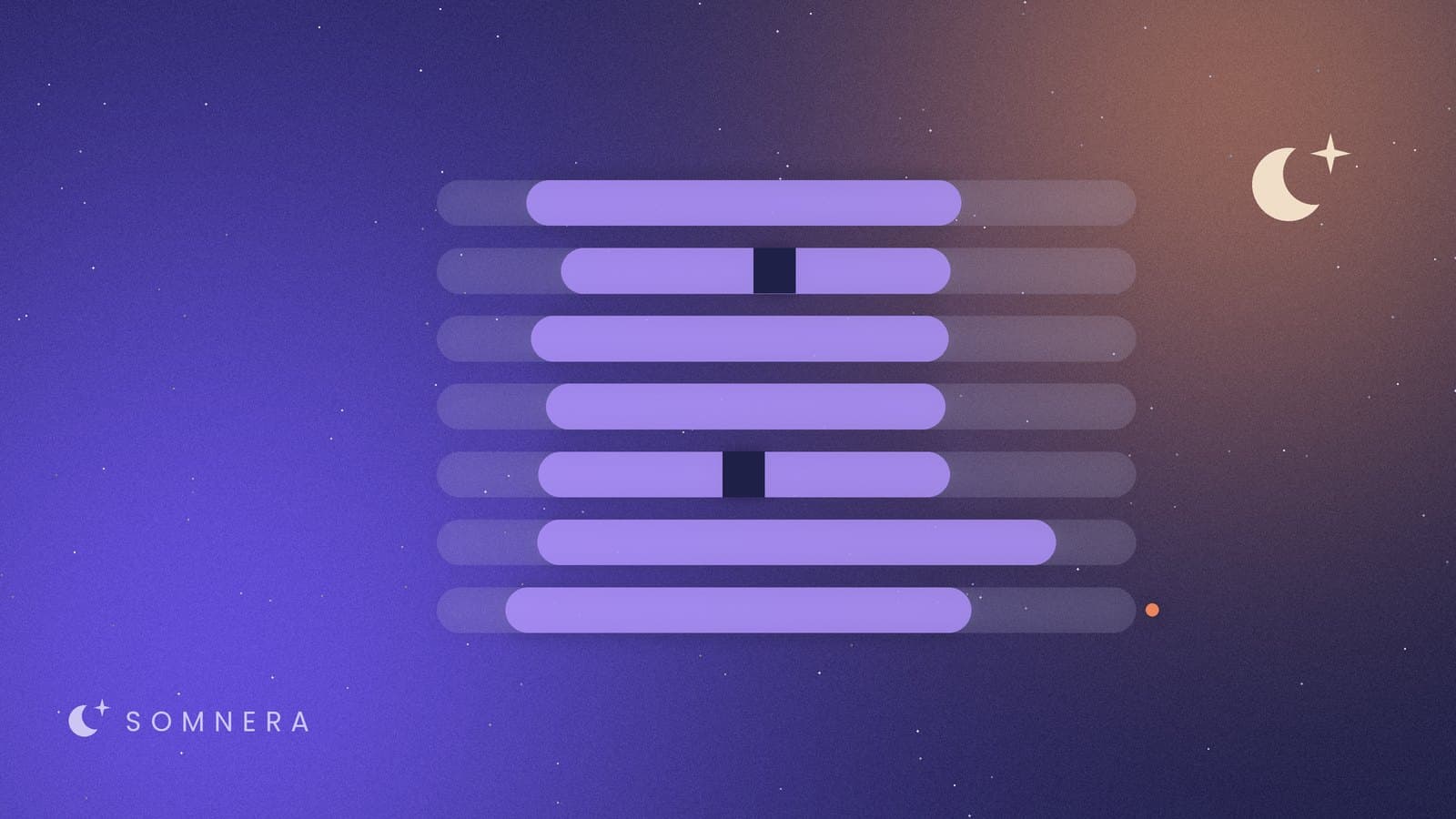
That last pattern deserves a picture, because it is the bit almost everyone gets wrong.

Chasing more hours in bed Lots of time in bed, sleep in fragments, long stretches awake Matching time in bed to actual sleep Less time in bed, a similar amount of sleep, in one solid block
Pale bars are time in bed; colored blocks are sleep. The same amount of sleep looks and feels very different depending on how much time in bed surrounds it.

The top bar is what years of trying hard tends to produce. And it teaches the brain something unhelpful: that bed is a place for lying awake, thinking. Sleep anxiety and the fear of not sleeping covers how that loop forms and how it is unpicked.

Why CBT-I may shorten your time in bed - for a while

This is the part that sounds like a prank. You are not getting enough sleep, so a CBT-I program suggests you spend less time in bed.

It is not a prank. It is sleep restriction therapy, one of the core components of CBT-I, and the logic follows directly from the diagram above. It is not a claim that you need less sleep. It is a temporary adjustment to time in bed, so that the sleep you are already getting becomes more solid.

The approach, in outline:

  • Start with a diary, not a guess. A week or two of sleep diary entries shows how much you are actually sleeping and how much time in bed surrounds it.
  • Set a window close to your actual sleep. Wake time is fixed first, and the window is built backwards from it. Standard protocols set a floor, usually around five hours, and do not go below it. How to calculate your sleep window.
  • Let sleep pressure do its work. Less time in bed means more pressure by bedtime, and more of your time in bed spent asleep.
  • Widen the window as sleep consolidates. When efficiency stays high across a week, the window grows by fifteen or twenty minutes. The aim is to land at the amount of sleep that is right for you - discovered, rather than assumed.

Be ready for the first couple of weeks to feel harder. Feeling more tired early on is a known and expected part of the method, not a sign it is failing. If you are sleepy enough that driving or operating machinery is unsafe, that is a reason to widen the window and talk to a clinician - not to push through. And if things stall, here is what to check when sleep restriction is not working.

There is a quiet bonus in all this. Sleep restriction replaces "did I hit eight?" with a calmer, more useful question: "is the sleep I am getting solid, and is my day okay?" For a lot of people, simply letting go of the number takes some of the pressure off the night.

When to see a doctor

Working on your sleep yourself is reasonable for many people. But some situations call for a clinician first, or alongside:

  • You fall asleep unintentionally during the day, especially while driving.
  • Someone has noticed you snore loudly, gasp, or stop breathing in your sleep.
  • You have an uncomfortable urge to move your legs in the evening, or your legs jerk at night.
  • Your low mood, anxiety or worry is present through the day, not just at bedtime.
  • You have a medical condition such as epilepsy or bipolar disorder, or you are pregnant - sleep restriction should be guided by a clinician in these cases.
  • You are using sleep medication and are thinking about changing it. Do not change or stop any medication without talking to the clinician who prescribed it.

If any of these apply, when to see a sleep specialist and how to talk to your doctor about insomnia are good next reads.

The short version

How much sleep you need is a range, not a pass mark. The CDC's adult recommendation is a floor with room above it, your own need sits somewhere in there, and your daytime functioning is the best gauge you have. If you have insomnia, chasing a number tends to backfire - and the evidence-based route, CBT-I, may briefly ask for less time in bed so that the sleep you get can become solid again.

Somnera is a self-guided education program built on CBT-I, founded and written by Dr. Camilo Ruiz, DO, FACOI, FAASM. It is not a diagnosis and does not replace care from your own clinician. The assessment is free and takes about two minutes.

Sources and further reading

Frequently asked questions

The CDC lists 7 or more hours for adults aged 18 to 60, 7 to 9 hours for ages 61 to 64, and 7 to 8 hours for 65 and older. Those are population recommendations. Your own need sits somewhere in that range, and how you function during the day is the better guide.

For some people on some nights it is fine, and it sits below the CDC's adult recommendation. If you regularly sleep six hours and feel drained, foggy or sleepy at dangerous moments, that is worth looking into. If you have insomnia, the bigger question is usually how solid those hours are and how much time in bed surrounds them.

Eight hours is a reasonable average, not a personal prescription. Sleep needs vary between people and across life. Treating eight as a pass mark is one of the habits that keeps insomnia going, because it turns every night into a test.

Look at the day, not the clock. If you wake reasonably able to function, stay alert through the afternoon, and do not nod off when sitting quietly, you are probably close to your need. Persistent sleepiness, poor concentration and irritability suggest otherwise.

A longer lie-in feels like repayment, but it shifts your body clock and lowers sleep pressure for the next night. For people with insomnia, a fixed wake time every day, weekends included, tends to serve sleep better than catching up.

Because time in bed and time asleep are different things. Sleep restriction, a component of CBT-I, temporarily matches time in bed to the sleep you are actually getting, which builds sleep pressure and consolidates sleep. The window widens again as sleep becomes more solid.